
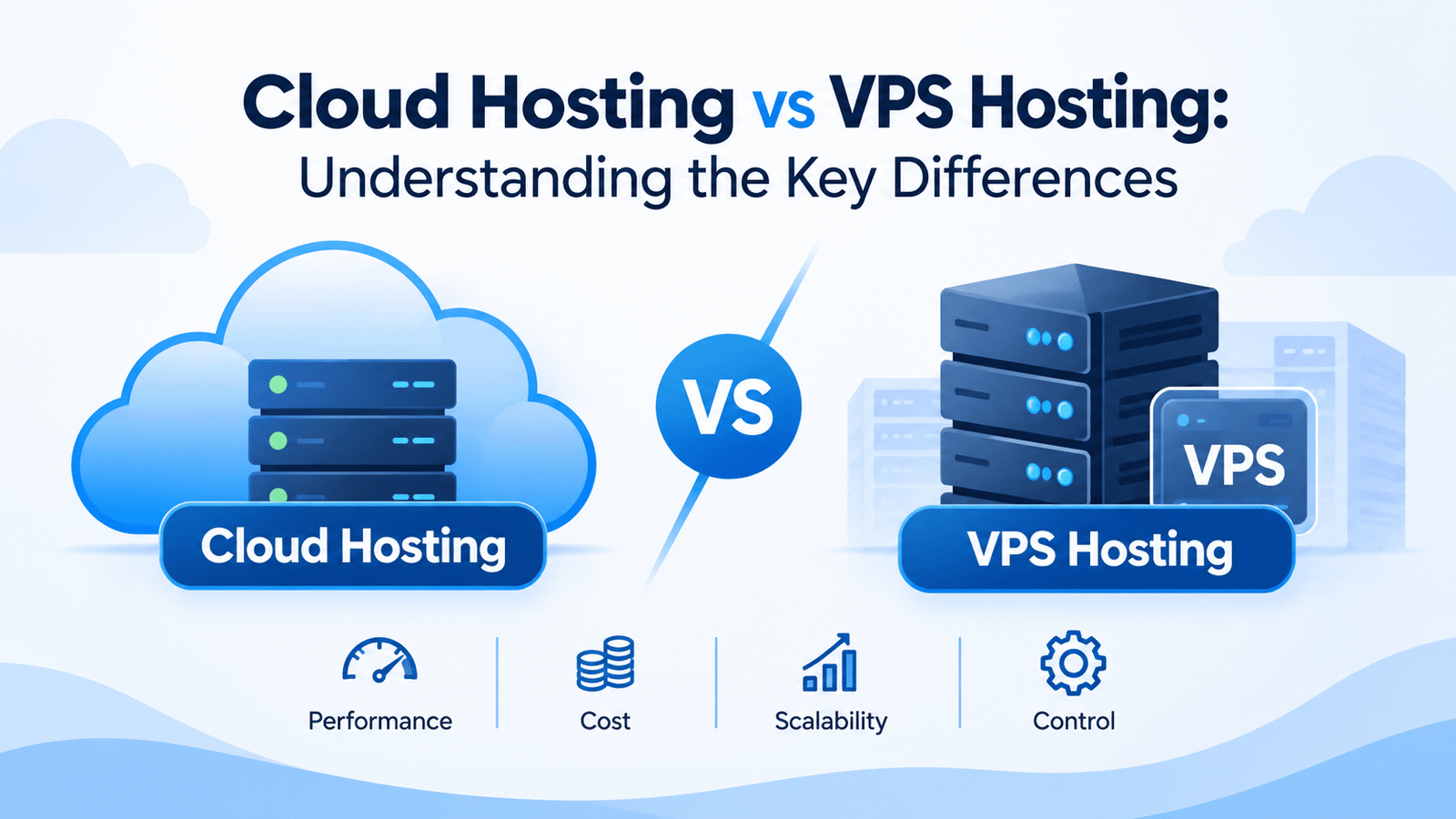
What works best for a website with minimal traffic might not be enough when an online store processes thousands of orders during a busy shopping season. That means the hosting needs of different websites are different; the same hosting solution cannot suit different websites. So, when comparing a cloud hosting India plan with other hosting options, traffic is not the only factor; your website’s needs, management level, and monthly budget are also crucial.
Cloud hosting and VPS hosting both offer an alternative to basic shared hosting. But they work differently, and that difference can affect how you maintain your website as it expands.
Two Different Ways of Hosting a Website
Behind cloud hosting is a network of servers that provides the computing resources needed to run your website. The way resources are managed depends on the provider. Some cloud hosting environments allow you to add the resources or move workloads without rebuilding the entire setup.
There is some overlap between the two. A VPS can run on cloud infrastructure, so the name alone does not tell you everything about a hosting plan. The provider’s actual infrastructure and included features matter more.
What If the Traffic Changes?
Imagine you run an online store selling festive decorations. For most part of the year, the number of visitors is reasonable. But during a festival like Diwali, the traffic increases rapidly, and more people browse and place orders simultaneously.
With the right cloud hosting plan, you can increase your cloud hosting resources to meet the demands if the number of visitors suddenly increases.
With a VPS, you get the CPU, RAM, storage, and bandwidth that come with your package. If your website starts to outgrow such constraints, it might be time to upgrade. This can be a simple choice if your resource needs are predictable enough.
How Much Control Do You Need?
Think about how much technical stuff you want to deal with before choosing a plan.
A VPS gives you your own virtual server environment and often root or administrator access on many plans. This is useful if you need specific software, custom server settings, or an environment to test apps in. Accountability is the price. With an unmanaged VPS hosting plan, you’ll need to handle operating system updates, security settings, and server maintenance.
Managed hosting alters that setup. The provider handles the server duties that are part of the service, so you don’t have as many normal maintenance activities to worry about.
When comparing VPS hosting India Plan, make sure to see if the plan is managed or unmanaged before comparing pricing. Cloud hosting can either be managed or unmanaged, so don’t assume all cloud plans require less technical expertise
Do Not Just Look At the Starting Price
Hosting costs can change as your website develops. The price shown on a plan page is only one part of the comparison.
VPS plans commonly have set resource allocations and a fixed monthly price. This makes budgeting easier, provided you account for bandwidth limits, control panel licences, backups, and upgrades.
Cloud hosting often follows a pay-as-you-go model. You pay for the resources you use. You can also adjust the resources as your website starts to grow. But the bill can grow when you use more server resources.
Ask yourself a practical question: would you rather pay for a defined set of resources each month, or have the option to adjust resources as your needs change? Your answer can help narrow down the options.
Which One Fits Your Website?
A VPS may also be a good fit for a developer running a custom program, a business with multiple websites, or an owner that wants more control over server settings. It can also do well when resource requirements are steady and capacity assigned is adequate.
It is worth considering cloud hosting if you have a growing online store, a business application with shifting demand or a project that needs flexible resource allocation. The rewards are based on the features provided by the provider.
Before deciding, check the upgrade process, backup arrangements, security responsibilities, support coverage, and location of the data center. For an audience based mainly in India, hosting your website on Indian servers can help reduce network delays, although actual loading speed also depends on other factors.
Choose for Your Actual Needs
There is no single winner in the cloud hosting vs VPS hosting comparison. The right hosting solution depends on your website’s current requirements, technical needs, budget, and ability to manage resources as your website grows.
host.co.in offers both cloud hosting and VPS hosting solutions on India-based infrastructure to support different website requirements. Whether you need flexible resources to handle changing traffic or a virtual server with defined CPU, RAM, and storage allocations, you can explore its Cloud VPS Hosting options. Compare the available plans, resource configurations, and management options to choose a hosting solution that meets your current needs and supports your website’s future growth.